Arm
Trondheim, NorwayApr 2026 – present
Staff Engineer
Using AI to make hardware design work simpler.
Apr 2024 – Apr 2026
Senior Engineer
Applied generative AI to help hardware teams work more efficiently.
AI-assisted engineering · Embedded systems
I work across AI-assisted engineering workflows, embedded systems, developer tooling, and infrastructure.
Welcome to kibk.net.
Type help, ls, or cd projects to jump.
Start with help or ls. Maybe you can find my secret.
Hi, I am Kirill. I have a Master’s Degree in Embedded Computing Systems, which led me to Trondheim and to a Hardware Designer role at Nordic Semiconductor. While writing, verifying, and integrating SystemVerilog modules, I got pulled into continuous development and tooling. That moved me toward design enablement and infrastructure, and today I work at Arm using AI to make hardware design work simpler. Outside of work, I tinker with home servers, automate parts of my home, and take every bicycle ride the weather allows.
From designing hardware to building the tools behind it.
Apr 2026 – present
Using AI to make hardware design work simpler.
Apr 2024 – Apr 2026
Applied generative AI to help hardware teams work more efficiently.
2022 – Mar 2024
Maintained the computing infrastructure, version control, and automated build and test systems used by the hardware team. Worked with IT on the physical infrastructure behind them.
Nov 2019 – 2022
Designed and verified digital input/output modules and integrated them into larger chip designs. Also maintained the team’s automated build and test systems.
Jun – Aug 2018
Wrote embedded C for microcontrollers and demonstrated their capabilities. Built automation tools using Python, LaTeX, JavaScript, and HTML.
A foundation in electronics, digital systems, and embedded computing.
Aug 2018 – Oct 2019
Grade: 1.0
Digital system architecture, verification, and prototyping.
Studied SystemC and the architecture and verification of digital systems.
Master’s thesis: a SystemC/TLM framework for characterising and validating a memory controller’s RTL implementation.
Sep 2017 – Jun 2018
Distinction · 84%
Embedded processors, digital chip design, and hardware security.
Studied secure hardware design, digital IC and system design, nanoelectronic devices, cryptography, embedded processor design, and digital system synthesis.
Sep 2013 – May 2017
Grade: 5.0 / 5.0
Nanoelectronics, microwave electronics, and solid state electronics.
Bachelor’s thesis: parameters and characteristics of a wireless MEMS passive vibro-accelerometer.

Self-hosted infrastructure playground spanning Raspberry Pis, a VPS, Proxmox, and networking gear.
Its main objective is to learn. The cluster gives me a safe place to test networking, storage, and automation ideas before I depend on them elsewhere.
Proxmox hosts OPNsense firewall and OpenMediaVault for NFS, while the VPS carries public-facing traffic.

Custom split keyboards built around nRF52 boards, low-power firmware, and a lot of patience.
Lily58 uses nRFMicro boards based on nRF52840, so it stays wireless and low power while still being practical enough for daily use.
The next build leaned harder into RGB, low-profile switches, and screens. It is more of a show-off board, less efficient than the minimalist Lily58, and wired on purpose.

Embedded student hackathon built for more than 10 teams with 24 hours to create an embedded system from scratch.
Me and three other members of the team were responsible for the event from the first idea through the gala ceremony.
Sponsors included John Deere, STI, Lattice, and others. It was equal parts engineering logistics, community building, and controlled chaos.

Hybrid RTL and SystemC/TLM environment for validating a memory controller without paying full cycle-accurate simulation cost everywhere.
The goal was to accelerate RTL simulation of a memory controller while keeping the interesting parts cycle accurate.
The resulting setup was more than 100x faster than a fully RTL model while still remaining useful for validation work.
PDF Source code coming soon
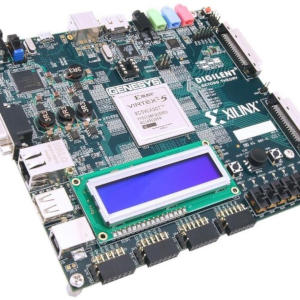
FPGA-based node for a distributed system with CPU, LCD controller, PS/2 keyboard controller, CAN controller, and Wishbone bus integration.
The system synchronized 16 bytes of ASCII data that appeared on the LCD after a key press on the keyboard, with the CPU acting as the bus master.
It was a useful exercise in crossing hardware interfaces, system integration, and getting the whole chain to behave under real constraints.
Source code unavailable
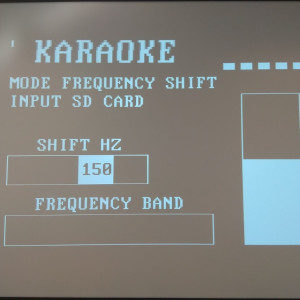
FPGA and Arm-based karaoke platform combining audio input, filtering, storage, and VGA output into a single SoC project.
One audio output was modified with filters and mixed with a second source while an Arm processor read files from SD card and pushed status to VGA.
It was a fun combination of DSP, platform plumbing, and user-facing controls on actual hardware.
Short video Source code unavailable
If you want to talk about embedded systems, infrastructure, automation, or an interesting problem, send a note.